

The scientific name of plants plays a vital role in plant identification and global recognition. The biological name of plants, also known as Plantae, follows a universal plant naming system based on binomial nomenclature using Latin names of plants. This scientific naming system helps botany scholars, plant researchers, and nature readers understand the plant taxonomy and classification of plants clearly.
Each species, whether tree scientific names, flower scientific names, herb scientific names, or shrub scientific names, has a unique identity under the universal plant classification. These scientific names list make it easy to avoid confusion from regional plant names and offer insight into the genus and species of plants. From indoor plant scientific names to scientific names of trees and flowers, the botanical nomenclature ensures consistent and accurate naming across the global plant names and the scientific plant system.
Tree Scientific Names

Trees are the backbone of our planet, offering shade, oxygen, and natural beauty. Here’s a collection of popular trees with their accurate scientific names and native regions around the world.
- Mango Tree (Mangifera indica) — (South Asia)
- Neem Tree (Azadirachta indica) — (India)
- Banyan Tree (Ficus benghalensis) — (India)
- Oak Tree (Quercus robur) — (Europe)
- Maple Tree (Acer saccharum) — (North America)
- Pine Tree (Pinus sylvestris) — (Eurasia)
- Teak Tree (Tectona grandis) — (South Asia)
- Eucalyptus Tree (Eucalyptus globulus) — (Australia)
- Coconut Tree (Cocos nucifera) — (Tropics)
- Baobab Tree (Adansonia digitata) — (Africa)
- Apple Tree (Malus domestica) — (Central Asia)
- Cherry Tree (Prunus avium) — (Europe & Western Asia)
- Olive Tree (Olea europaea) — (Mediterranean)
- Willow Tree (Salix babylonica) — (China)
- Ash Tree (Fraxinus excelsior) — (Europe)
- Birch Tree (Betula pendula) — (Europe & Asia)
- Mahogany Tree (Swietenia macrophylla) — (South America)
- Cedar Tree (Cedrus libani) — (Middle East)
- Walnut Tree (Juglans regia) — (Europe & Asia)
- Fig Tree (Ficus carica) — (Middle East)
- Lemon Tree (Citrus limon) — (Asia)
- Guava Tree (Psidium guajava) — (South America)
- Papaya Tree (Carica papaya) — (Central America)
- Bamboo (Bambusa vulgaris) — (Asia)
- Cashew Tree (Anacardium occidentale) — (Brazil)
- Jackfruit Tree (Artocarpus heterophyllus) — (South Asia)
- Tamarind Tree (Tamarindus indica) — (Africa & India)
- Date Palm (Phoenix dactylifera) — (Middle East)
- Lemon-scented Gum (Corymbia citriodora) — (Australia)
- African Tulip Tree (Spathodea campanulata) — (Africa)
Flower Plant Scientific Names
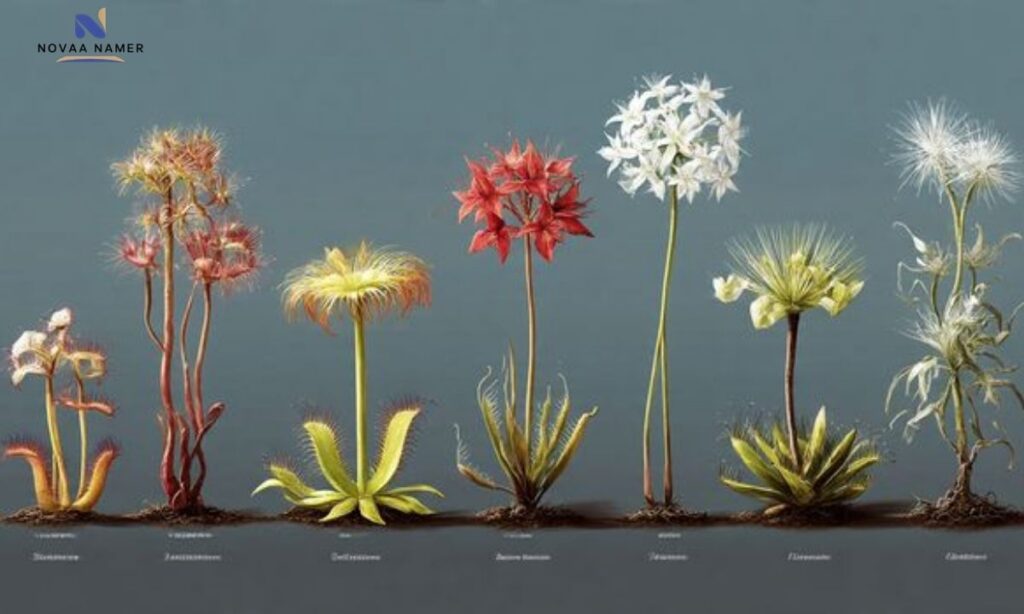
Flowers bring color, fragrance, and emotion to life. Below is a curated list of well-known flower plants with their scientific names and native regions, ideal for botany lovers and garden enthusiasts.
- Rose (Rosa indica) — (Asia)
- Sunflower (Helianthus annuus) — (North America)
- Marigold (Tagetes erecta) — (Mexico)
- Jasmine (Jasminum sambac) — (South Asia)
- Lotus (Nelumbo nucifera) — (Asia)
- Lily (Lilium candidum) — (Europe & Asia)
- Hibiscus (Hibiscus rosa-sinensis) — (China)
- Tulip (Tulipa gesneriana) — (Central Asia & Turkey)
- Daffodil (Narcissus poeticus) — (Europe)
- Orchid (Orchidaceae spp.) — (Worldwide Tropics)
- Poppy (Papaver somniferum) — (Europe)
- Dahlia (Dahlia pinnata) — (Mexico)
- Chrysanthemum (Chrysanthemum indicum) — (Asia)
- Violet (Viola odorata) — (Europe & Asia)
- Peony (Paeonia lactiflora) — (China)
- Carnation (Dianthus caryophyllus) — (Mediterranean)
- Geranium (Pelargonium graveolens) — (South Africa)
- Morning Glory (Ipomoea purpurea) — (Tropical America)
- Lavender (Lavandula angustifolia) — (Mediterranean)
- Zinnia (Zinnia elegans) — (Mexico)
- Petunia (Petunia hybrida) — (South America)
- Gardenia (Gardenia jasminoides) — (Asia)
- Gladiolus (Gladiolus hortulanus) — (South Africa)
- Camellia (Camellia japonica) — (East Asia)
- Begonia (Begonia semperflorens) — (South America)
- Snapdragon (Antirrhinum majus) — (Mediterranean)
- Buttercup (Ranunculus acris) — (Europe)
- Pansy (Viola tricolor var. hortensis) — (Europe)
- Cosmos (Cosmos bipinnatus) — (Mexico)
- Bluebell (Hyacinthoides non-scripta) — (Western Europe)
Medicinal Plants Scientific Names
Medicinal plants have been used for centuries to heal and restore balance in nature and humans alike. Here’s a list of common and rare healing plants with their scientific names and native regions.
- Aloe Vera (Aloe barbadensis miller) — (Arabian Peninsula)
- Holy Basil (Ocimum tenuiflorum) — (India)
- Turmeric (Curcuma longa) — (South Asia)
- Ginger (Zingiber officinale) — (South Asia)
- Ashwagandha (Withania somnifera) — (India)
- Ginseng (Panax ginseng) — (Korea & China)
- Peppermint (Mentha × piperita) — (Europe)
- Echinacea (Echinacea purpurea) — (North America)
- Chamomile (Matricaria chamomilla) — (Europe)
- Fenugreek (Trigonella foenum-graecum) — (Mediterranean & South Asia)
- Licorice (Glycyrrhiza glabra) — (Southern Europe & Asia)
- Gotu Kola (Centella asiatica) — (India & Southeast Asia)
- Neem (Azadirachta indica) — (India)
- Sage (Salvia officinalis) — (Mediterranean)
- Thyme (Thymus vulgaris) — (Europe)
- Rosemary (Rosmarinus officinalis) — (Mediterranean)
- Clove (Syzygium aromaticum) — (Indonesia)
- Cinnamon (Cinnamomum verum) — (Sri Lanka)
- Garlic (Allium sativum) — (Central Asia)
- Black Pepper (Piper nigrum) — (India)
- Dandelion (Taraxacum officinale) — (Europe)
- Valerian (Valeriana officinalis) — (Europe)
- Arnica (Arnica montana) — (Europe)
- Lemongrass (Cymbopogon citratus) — (India & Southeast Asia)
- Moringa (Moringa oleifera) — (India & Africa)
- Basil (Ocimum basilicum) — (Africa & Asia)
- Coriander (Coriandrum sativum) — (Mediterranean)
- Cardamom (Elettaria cardamomum) — (India)
- Senna (Senna alexandrina) — (Northeast Africa)
- Ginkgo (Ginkgo biloba) — (China)
Indoor Plants Scientific Names

Indoor plants are not only beautiful but also improve air quality and mental health. Below are the most popular indoor plants with their scientific names and regions of origin.
- Snake Plant (Sansevieria trifasciata) — (West Africa)
- Peace Lily (Spathiphyllum wallisii) — (Central & South America)
- Spider Plant (Chlorophytum comosum) — (South Africa)
- Money Plant (Epipremnum aureum) — (Southeast Asia)
- ZZ Plant (Zamioculcas zamiifolia) — (Eastern Africa)
- Areca Palm (Dypsis lutescens) — (Madagascar)
- Rubber Plant (Ficus elastica) — (Southeast Asia)
- Chinese Evergreen (Aglaonema commutatum) — (Philippines & Malaysia)
- Boston Fern (Nephrolepis exaltata) — (Tropical Regions)
- Aloe Vera (Aloe barbadensis miller) — (Arabian Peninsula)
- Pothos (Scindapsus aureus) — (Solomon Islands)
- Jade Plant (Crassula ovata) — (South Africa)
- Croton (Codiaeum variegatum) — (Indonesia)
- Dumb Cane (Dieffenbachia seguine) — (South America)
- Philodendron (Philodendron hederaceum) — (Central America)
- Bird of Paradise (Strelitzia reginae) — (South Africa)
- Calathea (Calathea ornata) — (Tropical South America)
- Anthurium (Anthurium andraeanum) — (Colombia)
- Fiddle Leaf Fig (Ficus lyrata) — (Western Africa)
- Dracaena (Dracaena fragrans) — (Africa)
- Lucky Bamboo (Dracaena sanderiana) — (Central Africa)
- Rubber Tree (Hevea brasiliensis) — (Brazil)
- Majesty Palm (Ravenea rivularis) — (Madagascar)
- Prayer Plant (Maranta leuconeura) — (Brazil)
- Swiss Cheese Plant (Monstera deliciosa) — (Central America)
- Ponytail Palm (Beaucarnea recurvata) — (Mexico)
- Schefflera (Schefflera arboricola) — (Taiwan & Hainan)
- Boston Ivy (Parthenocissus tricuspidata) — (East Asia)
- Asparagus Fern (Asparagus setaceus) — (Southern Africa)
- Cast Iron Plant (Aspidistra elatior) — (Japan & Taiwan)
Leaf Plants Scientific Name
Leaf plants are admired for their striking foliage and air-purifying qualities. From tropical varieties to ornamental species, these plants bring freshness and lush green energy indoors and outdoors.
- Caladium (Caladium bicolor) — (South America)
- Coleus (Coleus scutellarioides) — (Southeast Asia)
- Elephant Ear (Alocasia macrorrhizos) — (Southeast Asia)
- Begonia Rex (Begonia rex-cultorum) — (India)
- Ti Plant (Cordyline fruticosa) — (Pacific Islands)
- Aglaonema Red (Aglaonema siam aurora) — (Thailand)
- Croton Petra (Codiaeum variegatum ‘Petra’) — (Malaysia)
- Calathea Orbifolia (Calathea orbifolia) — (Bolivia)
- Hosta (Hosta sieboldiana) — (Japan)
- Syngonium (Syngonium podophyllum) — (Central America)
- Dieffenbachia Tropic (Dieffenbachia maculata) — (South America)
- Nerve Plant (Fittonia albivenis) — (Peru)
- Peperomia (Peperomia obtusifolia) — (Caribbean)
- Rex Begonia Vine (Cissus discolor) — (Indonesia)
- Arrowhead Plant (Nephthytis afzelii) — (West Africa)
- Prayer Plant Lemon Lime (Maranta leuconeura var. kerchoveana) — (Brazil)
- Philodendron Brasil (Philodendron hederaceum var. brasil) — (Central America)
- Calathea Medallion (Calathea veitchiana) — (Ecuador)
- Dumb Cane Compacta (Dieffenbachia amoena) — (South America)
- Polka Dot Plant (Hypoestes phyllostachya) — (Madagascar)
- Fatsia Japonica (Fatsia japonica) — (Japan)
- Purple Heart (Tradescantia pallida) — (Mexico)
- Alocasia Polly (Alocasia amazonica) — (Hybrid – South America)
- Silver Pothos (Scindapsus pictus) — (Southeast Asia)
- Velvet Calathea (Calathea rufibarba) — (Brazil)
- Monstera Adansonii (Monstera adansonii) — (Central America)
- Taro Plant (Colocasia esculenta) — (India)
- Wandering Jew (Tradescantia zebrina) — (Mexico)
- Banana Leaf Plant (Musa acuminata) — (Southeast Asia)
- Cordyline Red Sister (Cordyline terminalis ‘Red Sister’) — (Hawaii)
Shrub and Bush Plants Biological Names
Shrubs and bushes are essential for landscape design and natural borders. These hardy plants offer year-round greenery and vibrant blooms that thrive in diverse climates.
- Hibiscus (Hibiscus syriacus) — (Asia)
- Hydrangea (Hydrangea macrophylla) — (Japan)
- Azalea (Rhododendron indicum) — (China & Japan)
- Oleander (Nerium oleander) — (Mediterranean)
- Bougainvillea (Bougainvillea glabra) — (South America)
- Gardenia (Gardenia jasminoides) — (Asia)
- Camellia (Camellia sasanqua) — (Japan)
- Forsythia (Forsythia suspensa) — (China)
- Butterfly Bush (Buddleja davidii) — (China)
- Mock Orange (Philadelphus coronarius) — (Europe)
- Spiraea (Spiraea japonica) — (Japan)
- Lilac (Syringa vulgaris) — (Southeast Europe)
- Boxwood (Buxus sempervirens) — (Europe & Asia)
- Firethorn (Pyracantha coccinea) — (Southern Europe)
- Acalypha (Acalypha wilkesiana) — (Pacific Islands)
- Barberry (Berberis thunbergii) — (Japan)
- Bottlebrush (Callistemon citrinus) — (Australia)
- Lantana (Lantana camara) — (Tropical America)
- Plumbago (Plumbago auriculata) — (South Africa)
- Jasmine Bush (Jasminum fruticans) — (Mediterranean)
- Daphne (Daphne odora) — (China)
- Loropetalum (Loropetalum chinense) — (China)
- Viburnum (Viburnum tinus) — (Europe)
- Rosemary Bush (Rosmarinus officinalis ‘Prostratus’) — (Mediterranean)
- Holly (Ilex aquifolium) — (Europe)
- Wintergreen (Gaultheria procumbens) — (North America)
- Nandina (Nandina domestica) — (East Asia)
- Golden Dewdrop (Duranta erecta) — (Tropical America)
- Cotoneaster (Cotoneaster horizontalis) — (China)
- Hebe (Hebe speciosa) — (New Zealand)
Key Plant Families & Their Scientific Names
Plant families group species with shared traits and evolutionary origins. Understanding these families helps botanists, gardeners, and students classify and identify plants accurately.
- Poaceae — Grass Family (Wheat, Rice, Maize) — (Worldwide)
- Fabaceae — Legume Family (Beans, Peas, Clover) — (Global)
- Rosaceae — Rose Family (Apples, Pears, Roses) — (Northern Hemisphere)
- Solanaceae — Nightshade Family (Tomato, Potato, Chili) — (Worldwide)
- Asteraceae — Daisy Family (Sunflower, Dandelion, Marigold) — (Global)
- Lamiaceae — Mint Family (Basil, Lavender, Mint) — (Worldwide)
- Orchidaceae — Orchid Family (Orchids) — (Tropics)
- Apiaceae — Carrot Family (Carrot, Celery, Parsley) — (Temperate Zones)
- Brassicaceae — Mustard Family (Cabbage, Broccoli, Radish) — (Global)
- Amaryllidaceae — Amaryllis Family (Onion, Garlic, Daffodil) — (Worldwide)
- Malvaceae — Mallow Family (Hibiscus, Cotton, Okra) — (Tropics)
- Rutaceae — Citrus Family (Lemon, Orange, Lime) — (Tropics & Mediterranean)
- Araceae — Arum Family (Philodendron, Peace Lily) — (Tropical Regions)
- Euphorbiaceae — Spurge Family (Cassava, Rubber Plant) — (Tropics)
- Myrtaceae — Myrtle Family (Eucalyptus, Guava) — (Southern Hemisphere)
- Apocynaceae — Dogbane Family (Oleander, Frangipani) — (Tropics)
- Cucurbitaceae — Gourd Family (Pumpkin, Cucumber, Melon) — (Global)
- Cyperaceae — Sedge Family (Papyrus, Sedge) — (Wetlands)
- Lauraceae — Laurel Family (Avocado, Bay Laurel) — (Tropical & Subtropical)
- Liliaceae — Lily Family (Lily, Tulip) — (Worldwide)
- Rosales — Rose Order (Mulberry, Elm, Fig) — (Temperate Zones)
- Piperaceae — Pepper Family (Black Pepper, Betel Leaf) — (Tropics)
- Zingiberaceae — Ginger Family (Turmeric, Ginger, Cardamom) — (Asia)
- Caryophyllaceae — Pink Family (Carnation, Chickweed) — (Europe & Asia)
- Ericaceae — Heath Family (Blueberry, Rhododendron) — (Northern Hemisphere)
- Musaceae — Banana Family (Banana, Plantain) — (Tropics)
- Moraceae — Mulberry Family (Ficus, Breadfruit) — (Tropics)
- Anacardiaceae — Cashew Family (Mango, Pistachio, Poison Ivy) — (Tropics)
- Crassulaceae — Stonecrop Family (Jade Plant, Sedum) — (Global)
- Arecaceae — Palm Family (Coconut, Date Palm) — (Tropics)
Frequently Asked Questions
What is the scientific name of the mango plant?
The scientific name of the mango plant is Mangifera indica, native to South Asia.
What is the scientific name of the rose flower?
The scientific name of the rose flower is Rosa indica, commonly found in Asia.
What is the scientific name of the neem tree?
The scientific name of the neem tree is Azadirachta indica, known for its medicinal value in India.
What is the scientific name of the sunflower plant?
The scientific name of the sunflower is Helianthus annuus, native to North America.
What is the scientific name of the banana plant?
The scientific name of the banana plant is Musa acuminata, originating from Southeast Asia.
What is the scientific name of the coconut tree?
The scientific name of the coconut tree is Cocos nucifera, found in tropical coastal regions.
What is the scientific name of the tulip flower?
The scientific name of the tulip is Tulipa gesneriana, native to Central Asia and Turkey.
What is the scientific name of the papaya plant?
The scientific name of the papaya plant is Carica papaya, originating from Central America.
What is the scientific name of the guava plant?
The scientific name of the guava plant is Psidium guajava, native to South America.
What is the scientific name of the jasmine plant?
The scientific name of the jasmine plant is Jasminum sambac, widely grown in South Asia for its fragrance.
Final Words
Understanding the scientific names of common plants helps us identify species accurately and avoid confusion caused by local names. These names, based on binomial nomenclature, reveal a plant’s genus and species, creating a universal system recognized by botanists and gardeners worldwide. It connects people, science, and nature through a shared global language.
From trees and herbs to indoor plants and flowers, every plant has a unique biological identity. Learning their scientific plant names deepens appreciation for biodiversity and encourages accurate plant study and conservation. In short, knowing plant scientific names brings clarity, education, and a stronger bond with the natural world.

David is a passionate writer and creative thinker who shares unique insights on Novaanamer. With a love for exploring names, ideas, and meaningful content, he brings fresh perspectives to help readers find inspiration, creativity, and knowledge in everyday life. His goal is to make complex topics simple and engaging for everyone.